
Tinctures guide
THC Oil vs Gummies
Tinctures and gummies are both controlled, measured ways to consume hemp delta-9 THC. The choice comes down to onset timing, dose granularity, and personal taste preferences.
Quick answer
Sublingual tinctures produce effects in 15 to 45 minutes. Gummies take 30 to 120 minutes. If faster onset matters without vaping, a tincture held sublingually is the closest non-inhaled option.
Tinctures offer fractional-milliliter dose control, which allows finer adjustments than fixed-piece gummies. For users who need to fine-tune a precise dose, tinctures have a clear advantage.
Gummies win on palatability and portability for most users. Tinctures have a distinct oily taste that many people find unpleasant, particularly with hemp seed oil bases.
Key takeaways
- Onset speed and dose precision favor tinctures for users who need those qualities. Palatability and convenience favor gummies for everyone else.
- Tinctures are not a shortcut to faster onset if you do not hold them sublingually. Swallowed tinctures behave like edibles with similar onset timing to gummies.
- Both formats require the same documentation: mg per ml for tinctures, mg per piece for gummies, and a current independent COA for both.
Products worth comparing
Products to consider
These products match the topic covered above. Always verify current pricing and availability before purchasing.
| Product image | Product | Best For | Strength | Lab Tested | Price | Shop |
|---|---|---|---|---|---|---|
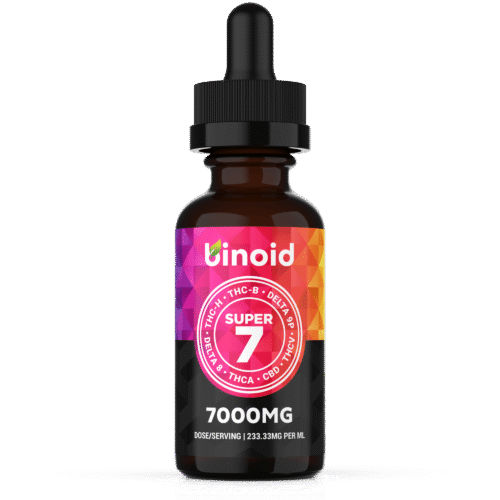
| Super 7 Tincture – 7000mgBinoid | 7000mg full-spectrum tincture blending multiple cannabinoids for shoppers who want a measured-dose liquid format instead of a vape or edible. | 7000mg blend | Yes | $39.99 | Check price at Binoid (opens in new tab) | |
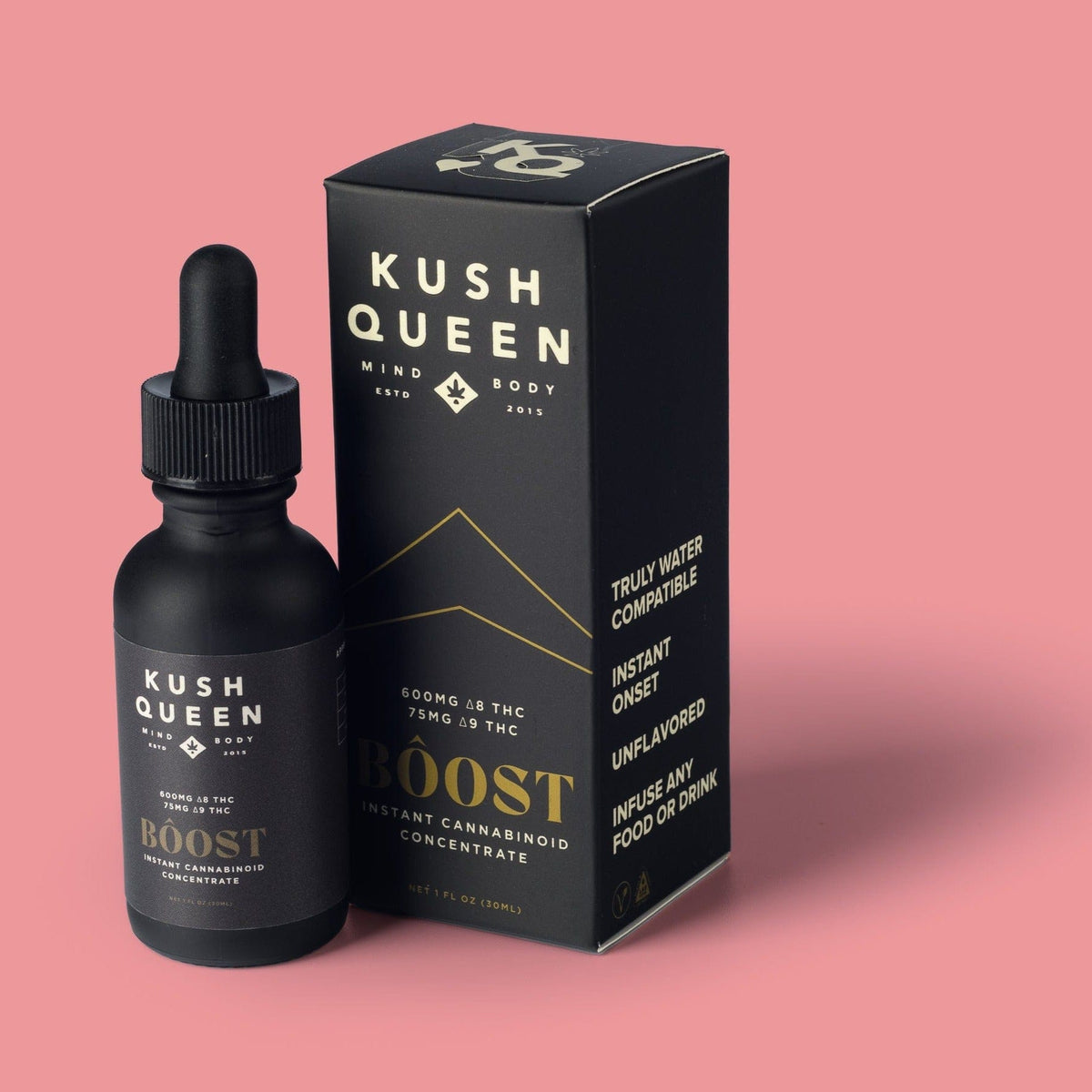
| Bôost Liquid THC ConcentrateKush Queen | Liquid THC concentrate for shoppers comparing flexible, measured drops that can be added to food or beverages. | N/A | No | $49.99 | Check price at KQ Shop (opens in new tab) |
Related topic
Explore the THC Tinctures hub
THC tinctures let you measure your dose precisely and adjust gradually — making them a popular choice for beginners and anyone who wants more control than a fixed-dose gummy. These guides cover how tinctures work, how they compare to edibles, and what to look for when buying.
Open THC TincturesProduct shortcut
Want products instead?
If you already know what format you want, jump straight into the matching product category.
Browse THC TincturesBest for
Buyers comparing tinctures and gummies who want to understand the practical differences before choosing a format.
If precise dosing matters most
Tinctures. A marked dropper allows 0.25ml increments — finer control than most fixed-piece gummies.
If convenience matters most
Gummies. No measuring, no dropper, no taste barrier. Take a piece and you are done.
How they compare
Onset timing
If you want the fastest non-inhaled onset, sublingual tinctures have a meaningful edge. The difference only applies if you actually hold the tincture sublingually — swallowing immediately produces similar timing to a gummy.
Dose precision
Tinctures offer more granular dose control for users who need it. Gummies are simpler for users who find per-piece dosing sufficient. Both are meaningfully more precise than vapes.
Taste and palatability
Gummies win on palatability for most users. MCT-based tinctures with added flavoring are more tolerable, but even the best tinctures have a more challenging taste profile than gummies. If you are sensitive to flavor, this is a meaningful practical consideration.
Portability
Gummies are more practical for on-the-go or travel use. Tincture bottles can leak if not properly sealed and require a stable surface to dose accurately. For home use, portability is less of a factor.
How tinctures and gummies differ in practice
Both tinctures and gummies deliver delta-9 THC through the digestive system or, in the case of sublingual tinctures, partially through direct mucous membrane absorption. The practical experience of using each format differs more than most buyers expect before trying both.
A gummy is a familiar food experience: take a piece, eat it, wait. A tincture requires a small ritual: draw up the measured dose, hold under the tongue for 60 to 90 seconds without swallowing, then swallow. The sublingual hold is the mechanism that makes tinctures faster-acting — skip it and you have spent extra effort for the same timing as a gummy.
The dosing experience also differs. With a gummy, you know you have consumed one piece at the labeled milligram count. With a tincture, you read the dropper markings, calculate the milligrams delivered (dose in ml × mg/ml concentration), and hold it sublingually. This is more involved but also more flexible. Users who want to try 3.75mg instead of 5mg can achieve that with a tincture; with gummies, they would need to cut a 5mg piece into three-quarters of its original size.
Dose precision: why it matters and who needs it
For most recreational adult users of hemp THC, the dose precision difference between tinctures and gummies is not the deciding factor. A 5mg gummy taken consistently works well for a stable routine without needing fractional-milligram adjustments. The precision advantage of tinctures becomes relevant in specific situations.
Users who need to titrate carefully — because they are particularly sensitive to THC effects, because they are trying to find a minimum effective dose, or because they are using hemp THC as part of a deliberate wellness routine — benefit from the 0.25ml increment flexibility. Moving from 5mg to 7.5mg is straightforward with a tincture and impossible without cutting pieces with gummies.
New users calibrating their baseline might also benefit from tincture flexibility: starting at 2.5mg and moving to 3.75mg if 2.5mg produces no effect is a smoother calibration than jumping between half gummies and full gummies. If dose precision is genuinely relevant to your situation, tinctures are the more appropriate format.
Who tinctures suit versus who gummies suit
Tinctures are better suited for users who: need faster onset than gummies and do not want to vape; want fractional dose control beyond what fixed-piece edibles allow; are comfortable with the oily texture and flavor of a tincture (particularly MCT base); and primarily use hemp THC at home where the additional ritual of sublingual dosing is practical.
Gummies are better suited for users who: prioritize palatability and simplicity; want fully portable, discreet consumption; are comfortable with fixed 2.5mg or 5mg dose increments; and do not need the faster onset that sublingual tinctures provide. This describes the majority of hemp THC consumers.
There is no inherent quality difference between well-formulated tinctures and well-formulated gummies from brands that meet your documentation standards. The choice is entirely about practical fit for your use case and personal preferences. Both require the same documentation standards, both deliver the same compound, and both can be appropriate options for adult consumers.
Practical use considerations for both formats
For tinctures: store the bottle upright, cap tightly after use, and keep it away from heat and light. Glass bottles are the standard for quality tinctures. Check the dropper rubber bulb periodically — it can degrade over time, which affects accurate dosing. If you find measuring under the tongue difficult (shaky hands, unfamiliar with the process), practice with the bottle before your first dose to get comfortable with the dropper.
For gummies: store in a cool, dry location away from heat. Gummies can melt in warm environments, which affects dose accuracy if pieces fuse together. In hot weather, a cool location or brief refrigerator storage prevents melting. Pre-portioning a session's amount before consuming — taking the piece out of the container rather than eating from the container — reduces the risk of accidental overconsumption.
For both: the same onset awareness applies. Even faster-onset sublingual tinctures take 15 to 45 minutes. Do not take more before the first dose has fully arrived. Write down your dose and timing for the first several sessions — your memory of "how much I took and when" is less reliable than a note.
Buyer checklist
- Decide whether faster onset (tinctures held sublingually) or convenience (gummies) is more important for your use case.
- For tinctures: confirm mg/ml on the label and a marked dropper.
- For gummies: confirm mg per piece labeling and a current COA.
- Both: verify an independent COA with cannabinoid content and contaminant screening.
- Start with a conservative dose on whichever format you choose and assess your response before adjusting.
Browse hemp THC tinctures
If you shop Amazon for hemp-derived THC tinctures, look for clear mg/ml labeling and COAs that confirm cannabinoid content per serving.
Elevated Guide may earn a commission on qualifying Amazon purchases. Always verify COAs, local laws, and shipping restrictions before purchasing. For adult use only where legal.
Sources and update notes
How this guide is maintained
Last reviewed: July 24, 2026
- This guide is reviewed periodically for product availability, cannabinoid terminology, claim restraint, and legal-awareness framing.
- Product prices, formulations, COAs, ingredients, and retailer policies can change after publication. Verify current details with the retailer before purchasing.
Frequently asked questions
Is a tincture the same as an edible?
A tincture swallowed immediately behaves like an edible — absorbed through the digestive system with similar onset timing. A tincture held sublingually for 60 to 90 seconds absorbs partly through mucous membranes, producing faster onset (15 to 45 minutes). Technically, a tincture held sublingually is not a standard edible — the sublingual component distinguishes the absorption pathway. But if you swallow it without the sublingual hold, the distinction disappears.
Which absorbs faster — a tincture or a gummy?
A properly administered sublingual tincture (held under the tongue for 60 to 90 seconds) absorbs faster than a gummy — typically 15 to 45 minutes versus 30 to 120 minutes for gummies. The faster onset only applies if you actually hold the tincture sublingually. Swallowed tinctures produce similar onset timing to gummies.
Can I add a tincture to food or drink?
Yes, but doing so converts it entirely to an edible. You lose the sublingual onset advantage and onset timing shifts to the standard 30 to 90 minutes for a processed edible. Many users add tinctures to food or drinks for palatability — this is a valid choice if you prefer it. Just account for the edible-equivalent onset timing. Fatty foods can slightly improve absorption of oil-based tinctures when consumed this way.
Which is better for precise dosing — tincture or gummies?
Tinctures, when properly labeled (mg/ml) and used with a marked dropper, allow finer dose increments than fixed-piece gummies. You can achieve 2.5mg, 3.75mg, 5mg, 7.5mg, or any 0.25ml increment, which translates to whatever milligram precision the concentration allows. Gummies are limited to whole or half pieces. For users who need granular dose control, tinctures offer a meaningful advantage.